Your baby needs to rebirth: Even the most straightforward birth is an incredibly intense experience for babies. They have just undergone the squeeze of their lives in vaginal deliveries or been grasped and pulled by surgical hands from mom’s uterus in ceasarean. In both cases, there can be remnants of these stark, new, unique-to-baby experiences imbedded in their fascia as trauma patterns manifesting as tightness. This tightness can be felt by mom as she holds her baby or tries to dress and undress baby noting that they “always feel tense!” Lip, tongue, cheek ties and poor latching can also be symptoms of a restricted fascial system. Babies have no way of articulating with words what they are feeling so their only way of communicating is to fuss or cry. Thus, babies who are difficult to settle, inconsolable, show symptoms of “colic”, or not tolerating specific positions such as tummy time or sitting in the carseat are simply indicating through crying that their fascia needs an opportunity to release.
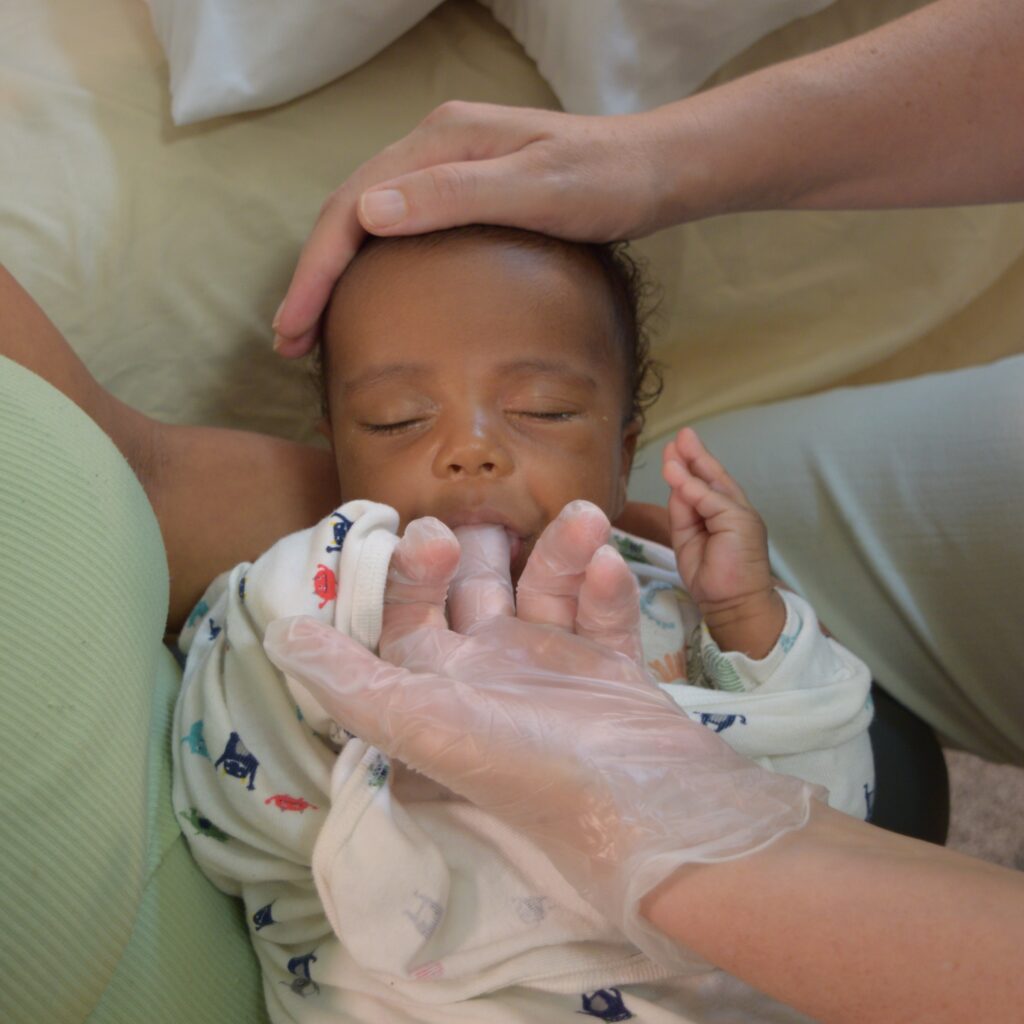
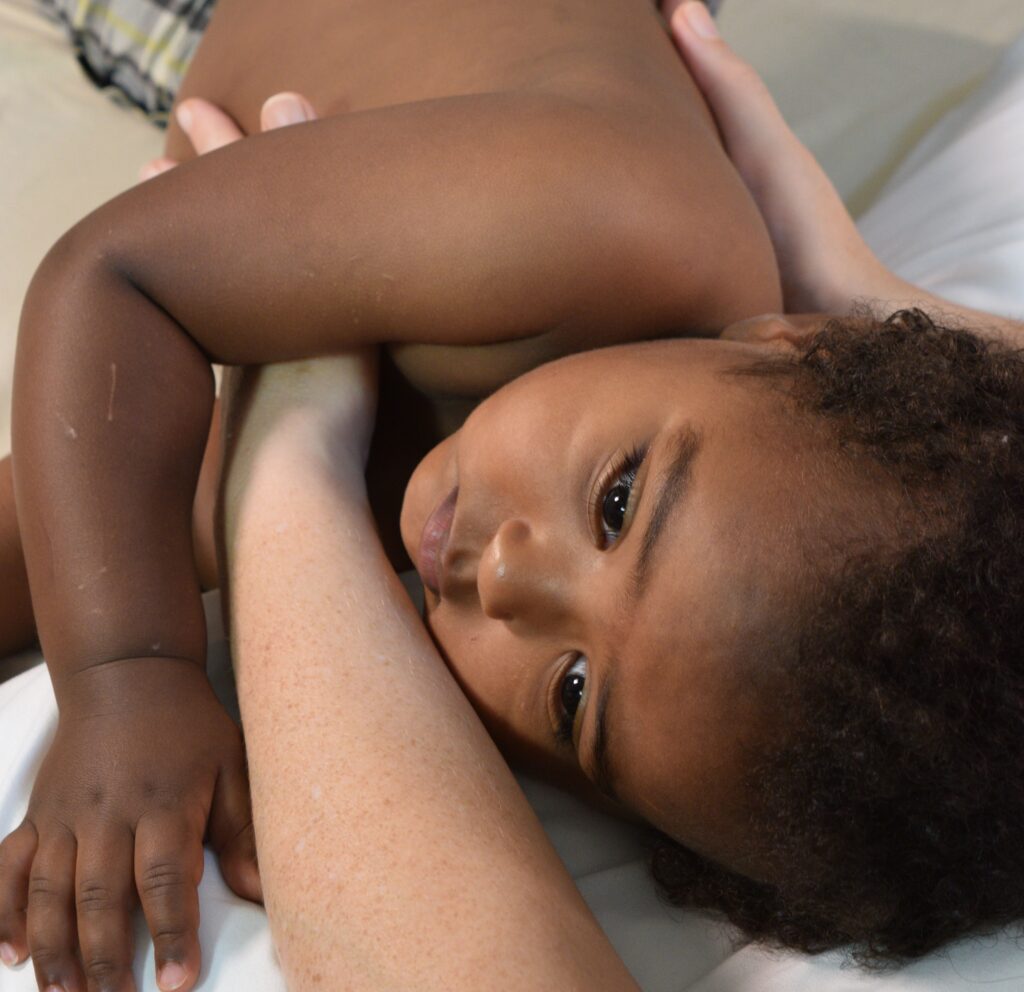
Through myofascial unwinding, where the baby’s body is gently held and supported, babies assume three-dimensional positions that replicate being in the womb or mimic the delivery process. Why? Cellular memory is positionally dependent. Baby knows the exact position in space it needs to get into to “remember” the intense moments to then discharge the unprocessed remnants. This sacred unwinding experience frees their system of the tightness in the fascia positively impacting symptoms such as constipation, poor latch, colic behaviors, lip and tongue ties, unexplained reflux, restless sleep, and helps restore baby’s comfortableness.
What’s it like to see my baby unwind? There’s a flow to the unwinding motion that everyone present gets caught up in as baby shifts from one supported position to another. Speed of movement varies from slow to quick and sometimes into complete stillness as baby processes stress, trauma, or times they had to disassociate during the intensity of the birthing process or medical procedures post-birth. Often baby will assume positions that mimic being in the womb, descending thru the vaginal canal, crowning or birthing. When parents are open to it, we use their hands too to support baby’s unwinding and rebirthing process. The whole room feels it with similar sacredness to the actual birth.
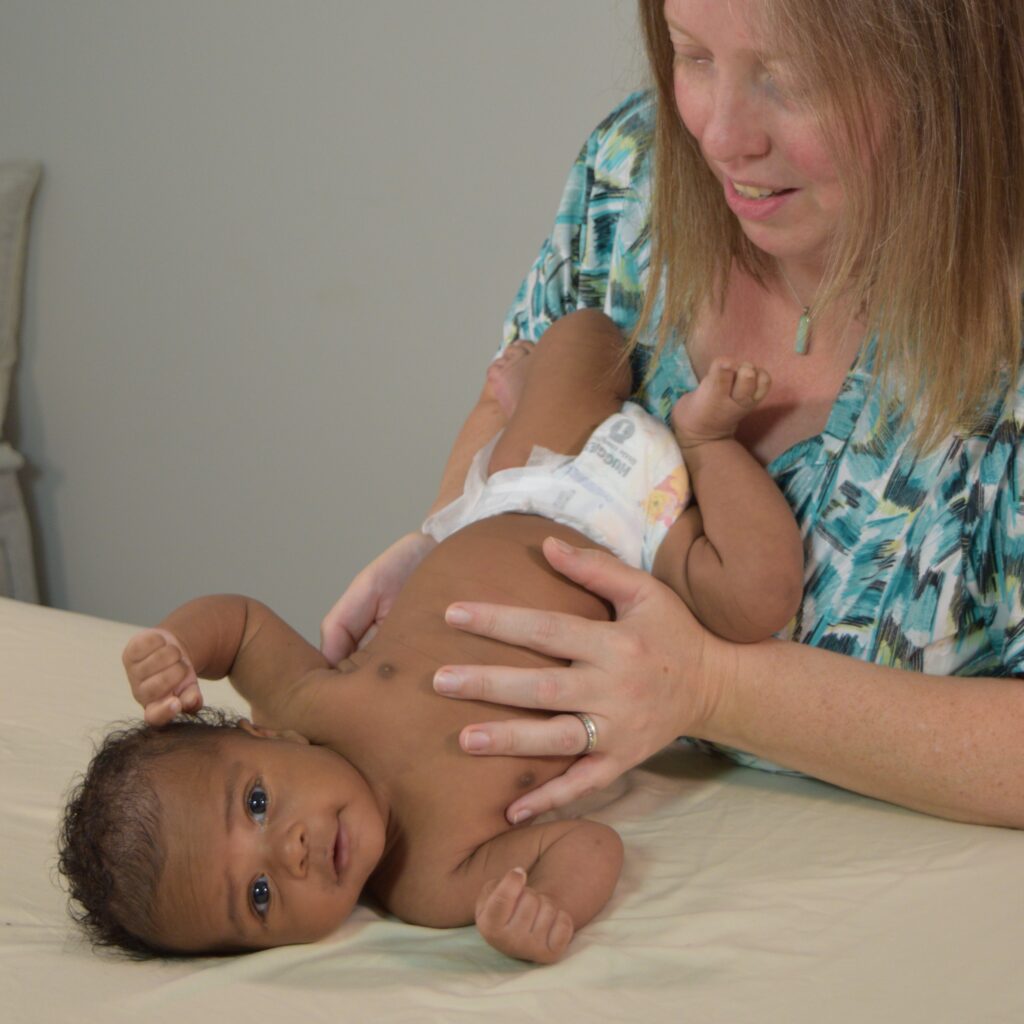
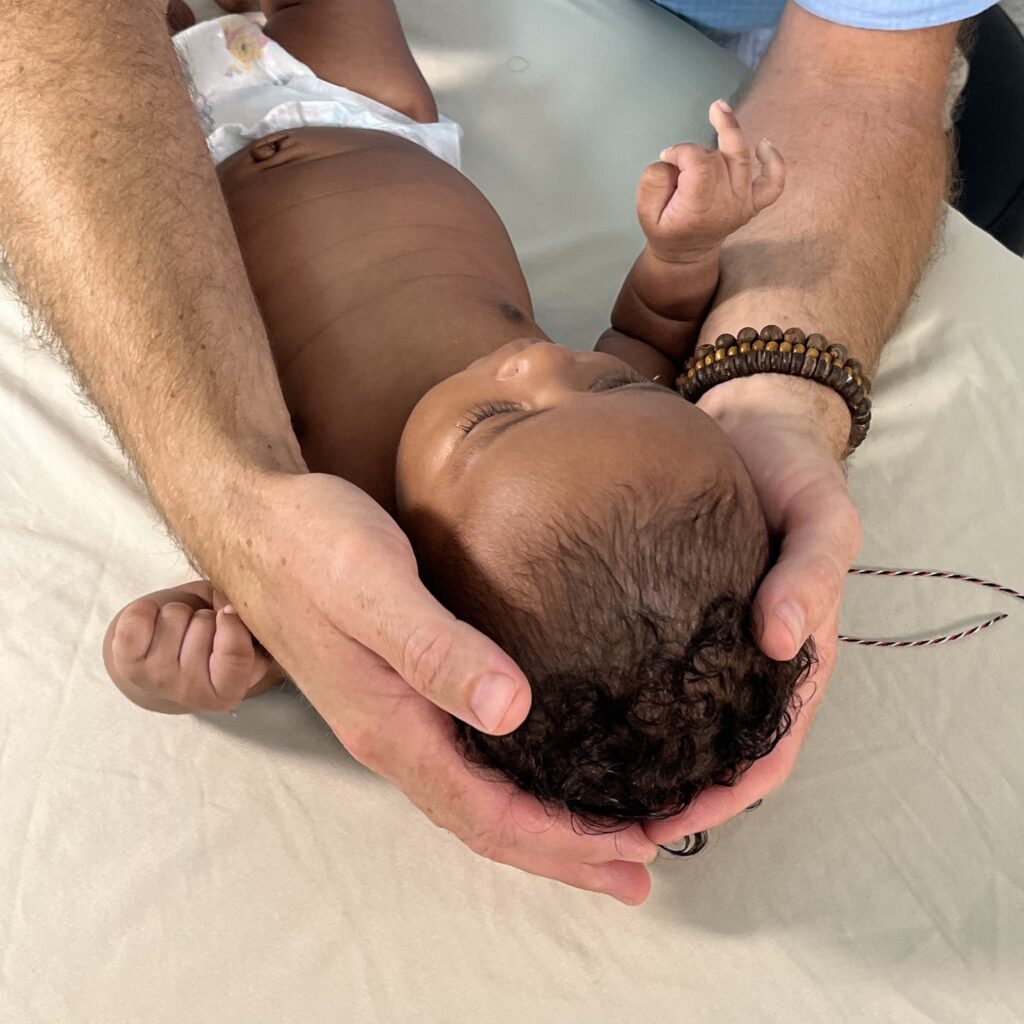
Will my baby cry? Since babies don’t use words yet, their way of expression is fussing and crying. For all of us, emoting is a way of out-letting pent up stress and transmuting trauma. Some portions of the unwinding process are quiet. Other periods are very expressive. Expressing emotions during unwinding is part of the baby’s journey to releasing tightness and healing.
What about my toddler or young child? Yes, myofascial release is helpful for these ages too. Recurrent ear infections, emotional dis-regulation, growing pains, and mouth breathing can be indications that their fascia is tight and their body needs a chance to release. Parents or caregivers stay in the room for the entire session. As the therapist, we understand that it’s a brand new environment, we are complete strangers, and there may be a history of medical interventions that have not been pleasant for the child. Therefore, it’s important that the child has their “attachment” person present to help facilitate their processing. Have more questions about your little one? Feel free to reach out to discuss your specific situation and see if myofascial release is a good fit for what your child is experiencing.